

A brand book should make the brand easier to use. That sounds obvious, yet many documents spend twenty pages protecting a logo and almost none explaining how the business should actually communicate.
The right scope depends on the company. A small hospitality launch and an international product team do not need the same document. Both, however, need a clear bridge between strategy and daily execution.

Start with the reason, not the logo
Before colours and typefaces, document the business context: who the brand serves, what it promises and what must feel different from competitors. This section should be short enough to remember and specific enough to reject the wrong creative decision.
- Purpose and business ambition
- Priority audiences and their real needs
- Positioning and value proposition
- Three to five operating principles
Define the verbal system
People often meet a brand through words before visuals. A useful verbal system explains the voice, preferred vocabulary and the difference between a headline, a product description and a service response.
Avoid vague labels such as ‘bold’ or ‘friendly’ without examples. Show the same message written correctly and incorrectly. Contrast teaches faster than adjectives.
- Voice principles with practical examples
- Messaging hierarchy and proof points
- Naming and terminology rules
- Sample headlines, calls to action and short descriptions
Build visual rules around real situations
Include the logo, colour, typography, grid, imagery and motion—but demonstrate them on the formats the team actually produces. A perfect stationery mockup is less useful than a mobile landing page, proposal cover or social template used every week.
- Logo versions, clear space and minimum size
- Accessible colour combinations
- Type scale and responsive hierarchy
- Layout, imagery, illustration, icon and motion principles
Turn rules into a working toolkit
A PDF alone rarely creates consistency. Link the brand book to editable templates, component libraries and approved assets. State who owns the system, where the latest files live and how new cases are reviewed.
The strongest brand books distinguish fixed elements from flexible ones. Teams need to know where consistency matters and where they are allowed to create.
- Downloadable master assets
- Presentation and social templates
- Digital components and design tokens
- Ownership, versioning and approval process
What can be left out
Do not add pages to make the document look substantial. Historical sketches, dozens of arbitrary logo prohibitions and mockups no one will produce create weight, not usefulness. Every page should answer a recurring question or prevent a likely mistake.
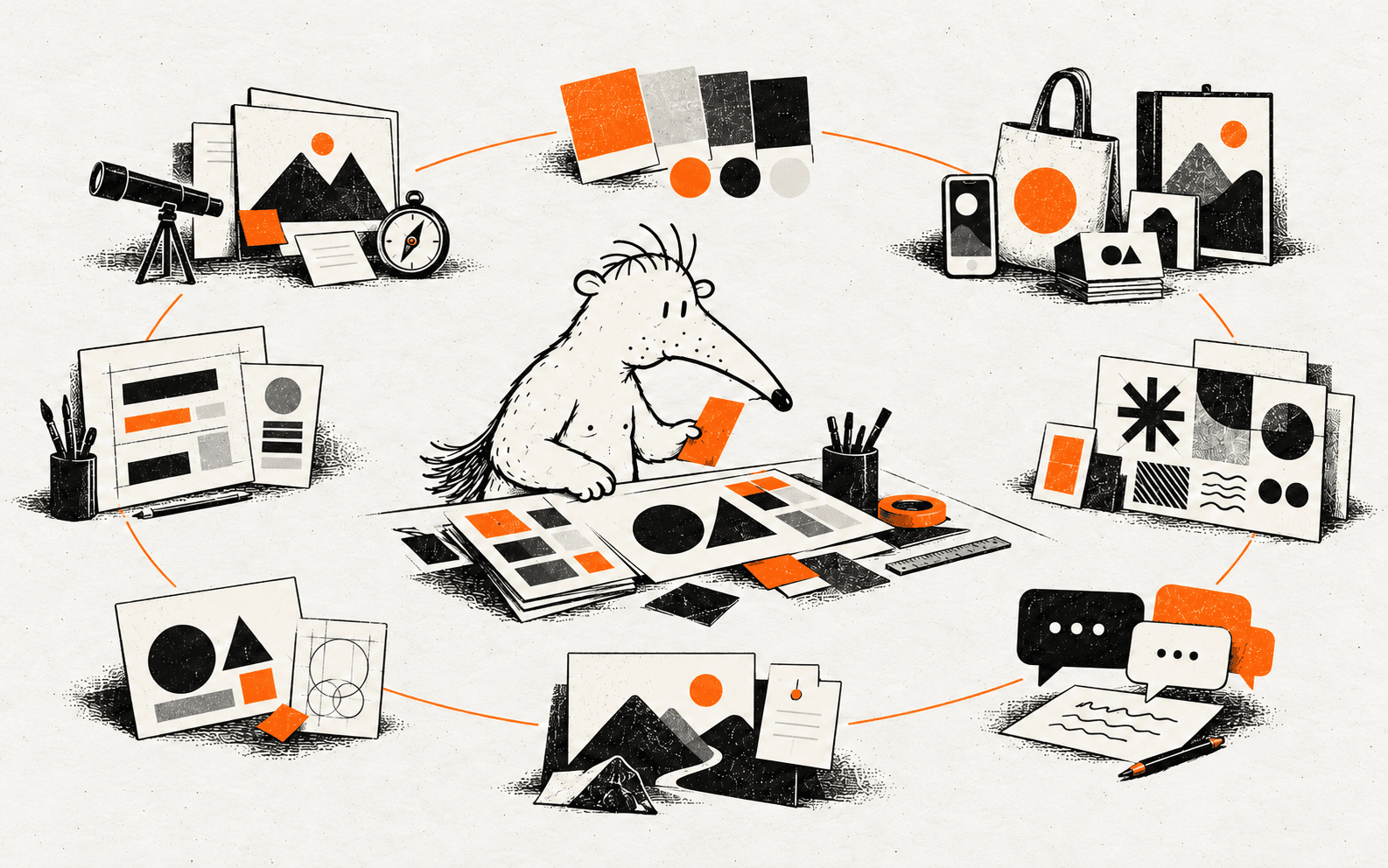
A good brand book reduces uncertainty. If a new employee, partner or agency can create something recognisably yours without guessing, the system is doing its job.